
Purchasing Grain at a Country Elevator — Part 4
In previous posts we explored some of the complexities involved in purchasing grain from farmers at a country elevator, including farm splits, quality discounts, grain contracting, storage, unpriced contracts, freight, fees, and ticket / contract advances.
In this concluding section we’ll discuss:
- Weight Certificates / Elevator Receipts
- Bid Sheet Pricing
- Settlements
Weight Certificates / Elevator Receipts
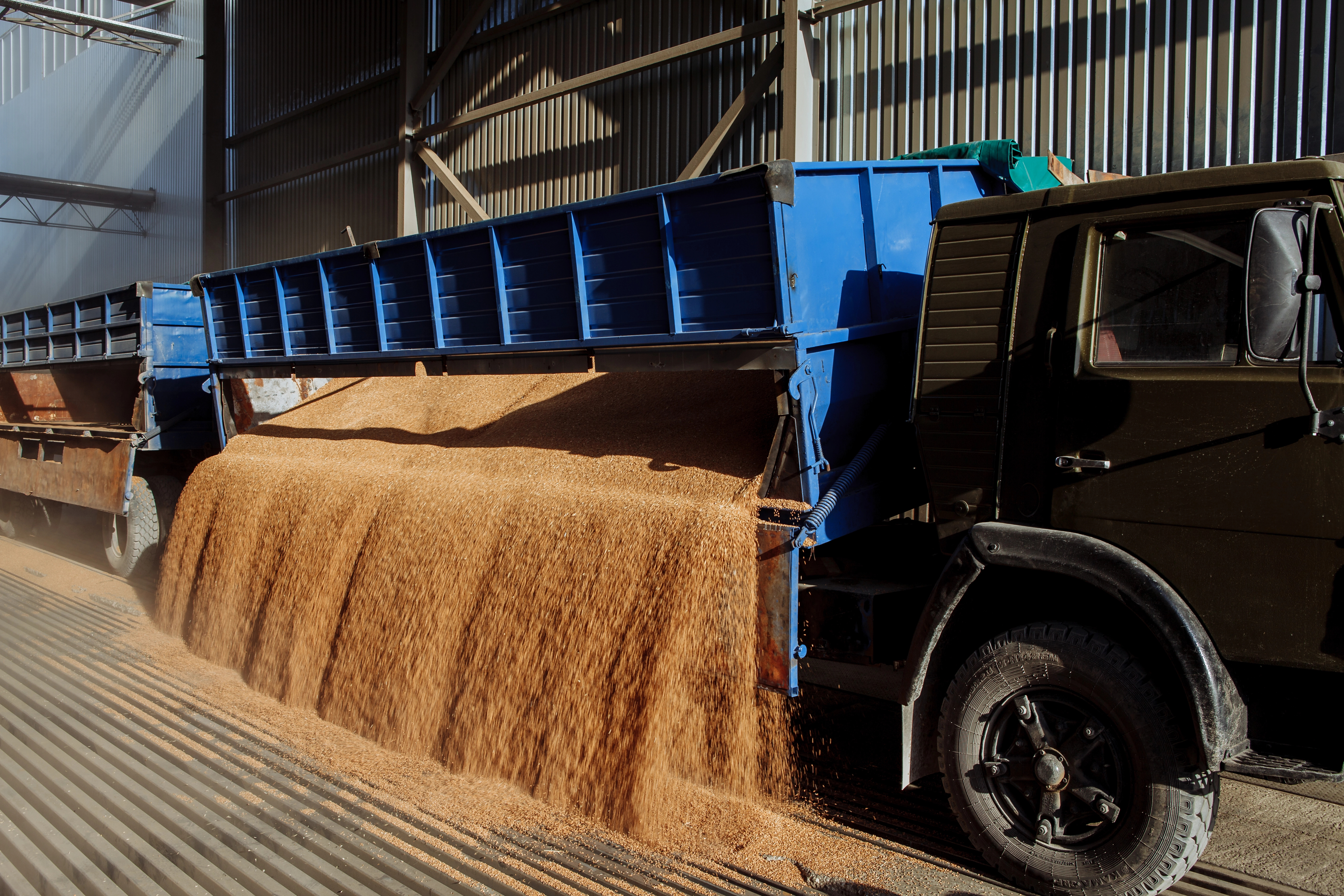
While it’s true that we live in an increasingly digital age, some locations require that farmers receive an elevator receipt showing gross unloaded weight for every delivered load. With Agrosoft, these documents can be printed or sent to the farmer electronically.
Through our scale ticketing system, Agrosoft gives you the ability to generate grading certificates (which can show the amount of moisture, dockage, or unit or priced discounts taken), as well as information identifying the load, such as the product and hauler information.
The grading certificate can contain a barcode that can be used to identify the load thru the rest of the process.
After the load had been weighed and gone through a preliminary grading, Agrosoft can generate a weight certificate that can be used as the proof that the load was delivered.
In addition, grain may be placed into storage, and a negotiable or non-negotiable warehouse receipt can be issued.
In Canada, farmers must be giving a Primary Elevator Receipt for each grain delivery. Agrosoft will print out all of the elevator receipt types, accountable gross, and other verbiage necessary to make your elevator receipt Canadian Grain Commission compliant.
Note that while we can interactively generate these documents through our scale ticketing system in Agrosoft as the load is being processed, it is possible for us to interface with the scale software to simply receive weights and grades into the system after the physical scale system has generated the necessary documentation. Either method works, and allows you to optimize the throughput of your scale ticketing system by providing you with maximum flexibility.
Bid Sheets
Real time pricing is available 24/7 through our Grower Portal, but we also give you the option of printing out a Bid Sheet that will show the futures, basis, and total price, by commodity, and by location, by option month.
This is particularly useful for locations that set a price each day, as opposed to using a continuous update method. A bid sheet can be generated each morning and sent to the locations, as well as to any farmers who have requested a daily pricing update.
Settlements
“Settlement” can refer both to the pricing of unpriced grain, or to the document with the load(s) detail that is generated when payment is issued to the farmer. Agrosoft will allow you to accomplish both tasks with ease.
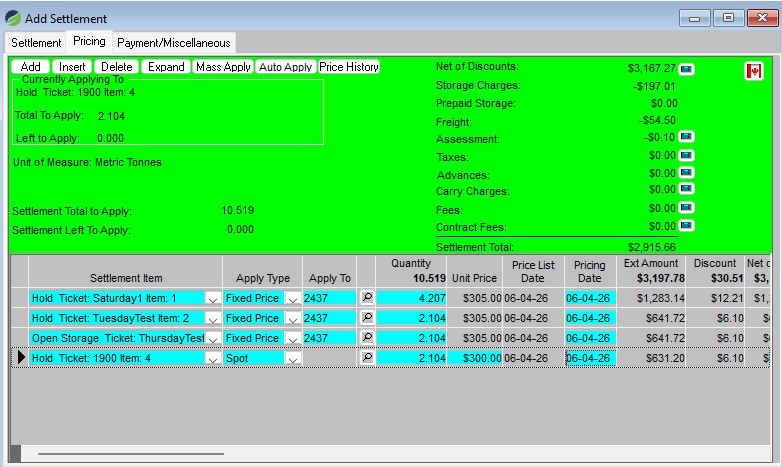
The Agrosoft settlement screen allows you to pick off multiple loads and price them at once. You can:
- Settle loads applied to unpriced contracts to one or more pricings of the contract.
- Price storage, and charge storage charges
- Split a single load between multiple pricings (priced contracts, or spot) or partially settle a single load.
- “Mass Apply” many loads to one or more contracts you select, or to a spot pricing.
- “Auto Apply” loads according to rules you predetermine, such as the oldest priced contract first. Note both auto apply and mass apply can be overridden or adjusted as you see fit.
The final settlement amount will be automatically adjusted for freight being charged back to the farmer, taxes, assessments/checkoff, grade/adjustments, accrued priced discounts, and any advances paid to date.
You may use the settlement screen to group one of more unpriced tickets into a single pricing. Similarly, you can use the payment screen to combine multiple settlements or other deliveries into a single payment.
The resulting payment details, settlement document and elevator receipt can all be electronically delivered to the farmer.