
Part 3: 3 Steps to Unify and Automate Your Agribusiness
An integrated agribusiness management system provides the foundation for better decisions. But realizing its full value requires more than connecting accounting and inventory records.
The opportunity comes from improving how information moves through the organization, from the moment a farmer delivers grain to final pricing, settlement, and reporting.
For grain elevators, merchandisers, and other agribusinesses, three steps can help turn disconnected processes into a more efficient operation.
Step 1: Automate Data Capture at the Source
Accurate information begins with how it enters your system. Many grain companies still rely on employees to manually transfer information from scale tickets, transportation records, or external applications. That creates work and increases the possibility of errors. Instead, capture transaction details digitally wherever possible.
Connect Scales and Delivery Records
Integrating weigh scales directly with grain management software allows delivery information to flow into the system as grain arrives. This can include:
- Gross, tare, and net weights
- Moisture and grade information
- Foreign material deductions
- Producer and contract identification
- Delivery location and date
Once recorded, this information can update inventory and contract records without repeated manual entry.
Integrate Transportation and Logistics
Application Programming Interfaces (APIs) and Electronic Data Interchange (EDI) can connect operational systems. Railcar weights, trucking records, and barge shipment information can be imported directly into the grain management platform. This reduces transcription while helping inventory records reflect actual commodity movements.
Establish Consistent Transaction Rules
Automation works best when the business establishes clear rules for incoming information. Each transaction needs a defined source, consistent validation, and an exception-handling process. The result is more reliable data across the organization.
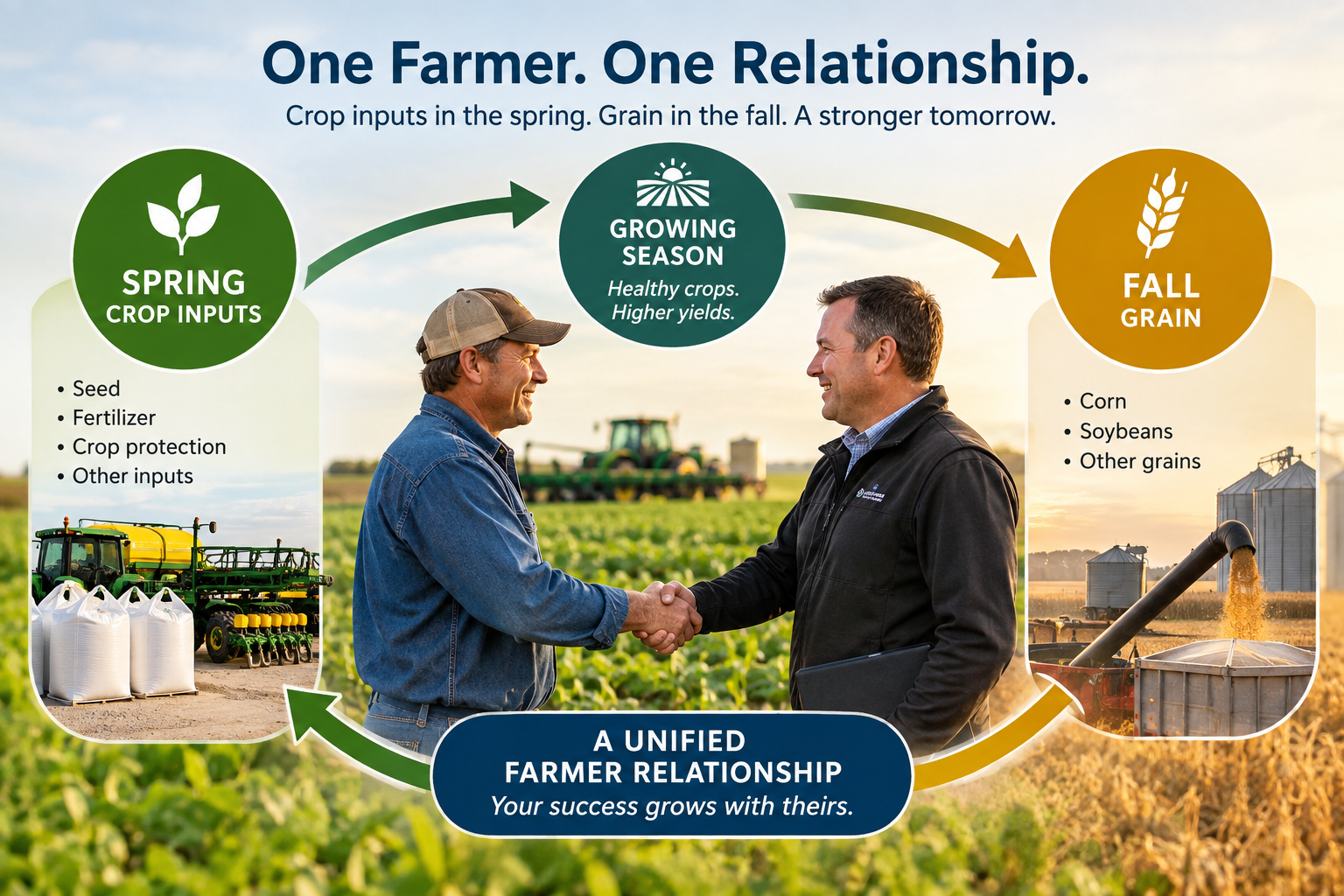
Step 2: Unify the Entire Farmer Relationship
A producer's relationship with an agribusiness extends beyond a single grain delivery. The same farmer who buys seed and fertilizer in spring may deliver corn or soybeans in fall. Yet many businesses manage crop input sales and grain procurement independently. Connecting those activities provides a more complete customer picture.
One Customer Profile for Purchases and Sales
When a farmer buys crop inputs, the transaction creates an accounts receivable obligation. When that farmer delivers grain, the business may owe the farmer money, creating an accounts payable obligation. Access to both sets of information makes it easier to understand outstanding balances, upcoming payments, and overall credit exposure.
Connect Crop Inputs to Future Grain Deliveries
Grower contracts can connect specific crop inputs with future grain production. For example, a farmer purchasing a particular seed variety may enter an agreement involving grain produced from that crop. Linking records where applicable provides information about expected deliveries and commodity characteristics and supports traceability.
Give Producers Access to Their Information
A secure producer portal can provide farmers access to:
- Grain delivery history
- Open contract balances
- Unpriced contracts
- Settlement documents
- Payment information
Instead of calling the office for every update, producers can review information when needed, improving transparency and reducing routine inquiries.
Step 3: Connect Merchandising Decisions to Daily Operations
Once information is captured accurately and producer relationships are connected, the next opportunity is automating merchandising. Pricing decisions often involve several steps between a farmer's offer and the transaction appearing in contract and financial records.
Streamline Producer Offers
Through a producer portal, farmers can submit offers to price grain or establish pricing on eligible contracts. Offers flow to the merchandising team for review alongside market information, contract balances, and the company's current position.
Accelerate Contract Updates
When an offer is accepted, the system can update corresponding contract information and related records through the configured workflow. This reduces the delay between a pricing decision and its reflection in operational information, while minimizing manual communication and re-entry.
Improve Position Visibility
As deliveries, shipments, and pricing activities occur, records can feed consolidated reporting. Teams can review:
- Physical inventory by location
- Outstanding purchase and sales contracts
- Contract balances by delivery period
- Futures positions and market exposure
- Relevant financial and inventory valuations
Connected information helps teams respond to market changes without assembling disconnected reports.
Building a More Efficient Agribusiness
These three steps work together. Automated data capture reduces errors at the beginning of a transaction. Unified farmer records improve coordination between crop inputs, procurement, accounting, and customer service. Connected merchandising workflows make pricing decisions easier to manage and position information more current.
For businesses considering modernization, the best starting point is to identify manual processes with the greatest operational burden. Start with high-impact integrations, establish consistent data practices, and expand automation as employees become comfortable with the workflow.
Solutions such as Grossman Software Solutions' Agrosoft and AgExceed are designed around specialized grain and agribusiness operations, supporting connected management.
The goal is straightforward: spend less time transferring and reconciling information, and more time using it to manage the business.
Related Questions
Q: Which agribusiness processes should be automated first?
A: High-volume tasks involving repetitive entry are a practical starting point, including scale tickets, delivery records, contract applications, and transportation data.
Q: How does connecting crop input sales and grain purchases improve producer credit management?
A: A shared producer record lets credit teams view amounts the producer owes and amounts owed for grain deliveries, providing a more complete financial relationship and better information for credit decisions.
Q: Can farmers submit grain pricing offers directly through an online producer portal?
A: When supported and configured, a portal can let producers view eligible contracts and submit pricing offers electronically. Merchandisers can review offers and update related contract records through connected workflows.
Ready to Put These Strategies into Practice?
BACK TO PART 1: Stop Accounting for Grain, Start Managing Your Entire Business